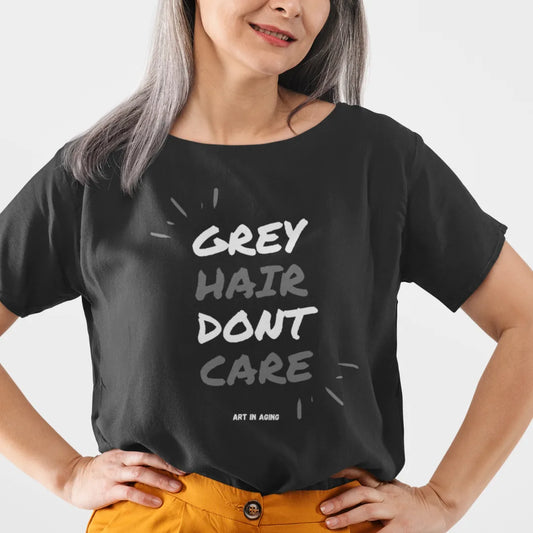
Grey Is Gold: Why Women Are Choosing Silver Hair as Their Power Move
There's a moment many women describe the same way. They're in the bathroom, looking at their roots, and something shifts. The color they've been chasing — the version of themselves they've been maintaining at significant expense and effort — suddenly looks less like youth preservation and more like a costume. And the silver growing in underneath starts to look like something else entirely.
It looks like themselves.
The phrase "grey is gold" has moved from hashtag to philosophy. Women in their 40s, 50s, and 60s are making the same decision, independently, across the country and the world: stopping the color, growing out the grey, and discovering that what grows in is not the beginning of looking old — but the beginning of looking like who they actually are.
What's Actually Driving the Grey Hair Movement
The numbers are significant. The global hair color market was worth over $22 billion in 2022. Women make up the majority of that spend, and a meaningful portion of that spend is going toward covering grey. For women who have been coloring since their early 30s, the lifetime math is sobering: $1,500 to $4,000 per year, multiplied by two or three decades, adds up to a number most people try not to calculate.
But the shift isn't primarily economic. It's identity.
Something changed when salons closed during the pandemic. Women who had been coloring their hair every four to six weeks went months without a salon visit. They saw their natural color — some for the first time in years, some for the first time ever as adults. And a significant number of them liked what they saw. Or at least found themselves less committed to going back.
At the same time, a community was growing online. The #silversisters hashtag has millions of posts. The grey hair transition accounts on Instagram and TikTok built audiences in the hundreds of thousands. Women were documenting the grow-out, sharing the hard weeks, and — critically — showing the results. Silver hair photographs beautifully. The shimmer, the contrast, the way it catches light. For a generation that had only ever seen grey hair framed as a problem to solve, seeing it celebrated was genuinely new.
Grey Hair Is Different — and That's the Point
One thing catches many women off guard during the transition: grey hair is not the same as the hair they remember. It tends to be coarser, drier, and more porous than pigmented hair. It responds differently to products. It has a texture and life of its own.
This surprises some women. It delights others. After years of hair that needed to be managed into submission, grey hair often has personality — it moves differently, catches light differently, and in the right cut, looks genuinely striking in a way that a color-matched, even-toned dye job rarely does.
What grey hair needs:
- A toning shampoo. Purple or violet shampoo used once or twice a week neutralizes the yellow and brassy tones that develop over time from environmental factors. This is the single most impactful product in a grey hair routine.
- Moisture. Grey hair tends to be drier than pigmented hair. A rich conditioner and a weekly deep conditioning treatment make a visible difference in texture and shine.
- A cut with intention. Grey hair rewards shape. Blunt bobs, layered cuts that remove bulk, and crops all look striking. The middle ground — long, one-length, no real style — tends to flatten the color's natural interest.
The Transition: What to Expect
Going grey is not an event. It's a process — typically 12 to 24 months for most hair lengths, longer for very long hair. The grow-out phase is the hardest part, psychologically. The line of demarcation between your natural grey and your colored ends is visible and real, and managing it takes some strategy.
Your options during the grow-out:
Cold turkey. Stop coloring entirely. Let it grow, trim the ends regularly to remove the colored portions, and give it time. The most straightforward path, and the one that most completely avoids further chemical processing.
Blending. Work with a colorist to add highlights or lowlights that soften the demarcation line and make the grow-out more gradual. Costs money and time, but makes the transition visually easier to live through.
The big chop. Cut shorter to remove most of the colored length faster. For women with long hair, this can shorten the transition from 24 months to under a year. Many women who do this find they like the shorter length and keep it.
What "Grey Is Gold" Actually Means
It means something different for every woman who chooses it.
For some, it's economic clarity — the end of a maintenance cycle that consumed time, money, and mental energy. For some, it's aesthetic — the discovery that their natural color is actually beautiful, that it suits them in a way that the dyed version never quite did.
For many, it's something harder to name. A decision to stop performing youth for an audience that wasn't paying that much attention anyway. A recognition that the years behind them are worth wearing, not covering. A form of self-respect that shows up every morning in the mirror.
Grey hair is not for everyone. But for the women who choose it — and it is a choice, not a surrender — it tends to feel like one of the better decisions they've made. The phrase "grey is gold" is not a consolation. It's a verdict.
Where to Start
If you're thinking about going grey, the most useful first step is finding the community. The Silver Sisters — women at every stage of their grey journey — are active, warm, and genuinely helpful. The questions that feel embarrassing to ask anywhere else get answered honestly by women who've been through it.
Art in Aging was built around exactly this community. Women 50+ who are done apologizing for getting older and are figuring out what it actually looks like to age on their own terms.
Browse the grey hair collection — apparel for women who have made the choice, and want to wear it.
Or start with the shirt: Grey Is Gold T-Shirt →
The Silver Sister Community
Ready for more than blog posts?
This is the room where hundreds of women talk about exactly this — going grey, positive aging, and life on the other side of the dye job. Weekly lives, member stories, and real conversations.
See what's inside → Founding membership: $27/month