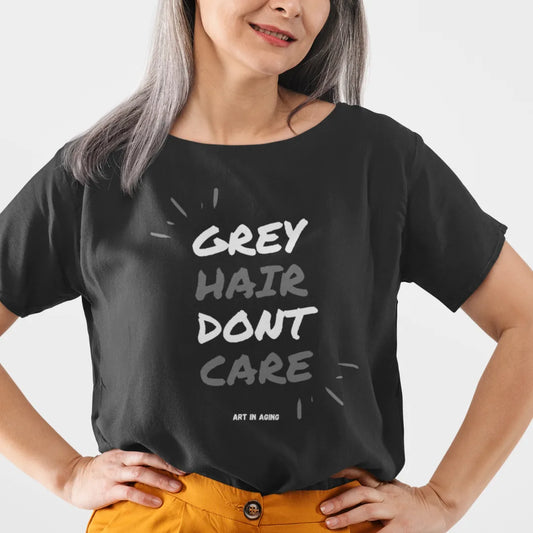
You've decided to stop dyeing your hair. Maybe you're a few months into your grey hair transition, or maybe you're still in that tender phase where you're thinking about it. Either way, you've hit the awkward middle: your roots are showing, they're not quite blended yet, and you're staring in the mirror wondering if you can just live with the demarcation line until the whole thing grows out. (Spoiler: you can, but you don't have to.)
The space between salon visits—or between committing fully to colour and letting nature take over—is real. It's messy. It's also temporary. But temporary doesn't mean you have to feel undone if that's not what you want. There are legitimate, non-permanent ways to bridge this gap that don't require you to go back to the dye bottle or spend your mortgage on salon visits. Some are quick fixes. Some are actually kind of fun. And all of them let you stay in control of your own timeline.
Root Touch-Up Sprays and Powders: The Honest Pros and Cons
Let's start with the most popular solution because it's genuinely useful—and genuinely limited. Root concealer sprays and powders are temporary cosmetic products that sit on top of your hair, coating the lighter (or darker) regrowth until you wash them out. They come in dozens of shades, they work quickly, and they're affordable. Brands like Color Wow, Bumble and bumble, and Rita Hazan make solid versions. You spray or brush them on, and the grey roots disappear.
Here's what actually happens when you use them: they work. They work well. Your roots are covered. You look polished. The problem is they're a bandage, not a solution, and they require maintenance. They can transfer onto your pillow, your hands, your scarf, or anyone who hugs you. If you have fine hair, they can feel heavy. If you're in a humid climate or you sweat, they may not last through the day. They'll wash out with your next shampoo, so you're reapplying regularly—sometimes daily if you're seeing people or photos matter to you.
That said, if you're in that micro-transition moment—three weeks before your hair appointment, or during the first six months of growing out when regrowth is dramatic—a root spray is honest work. It takes sixty seconds. It's reversible. It keeps you feeling like yourself while you're deciding what you actually want to do long-term. Just go in with eyes open: it's maintenance, not permanence.
Hair Chalk and Temporary Colour: Playful and Forgiving
If root sprays feel too clinical and you've got a slightly longer timeline, hair chalk or temporary hair color might appeal to you more. These products actually tint the hair temporarily without permanent dye—they wash out in one to three shampoos depending on the product and your hair texture.
Hair chalk is literal chalk in stick form. You dampen your hair slightly, rub the chalk stick over your roots or problem areas, and you're done. It's messy in a tactile way (your hands will be chalky), but it's also oddly satisfying. Temporary colour sprays and rinses work similarly but are less visible on application—you spray it on, it dries, and the colour is there until you wash it out. Brands like Manic Panic and Madison Reed make temporary options specifically designed for this.
The advantage: if you don't like how it looks, you can wash it out immediately. You're not stuck with anything. If you're experimenting—trying to see what your hair would look like if you went full grey, or testing whether a specific shade suits you before committing—temporary products let you play without consequence. Some people find this genuinely fun, especially if they've spent decades not "being allowed" to mess with their hair in experimental ways.
The disadvantage: temporary isn't actually that temporary on some hair textures, especially if your hair is coarse or porous. And if you've got grey hair that's quite white or silver, temporary colour may not show up as effectively as you'd hope.
Lowlights and Strategic Colour: Blending the Transition
This is where you might want to have a conversation with your stylist, even if you're not going back to full colour. If you're mid-transition and the contrast between your grey regrowth and your coloured hair is stark, lowlights—darker, subtle colour woven through your existing shade—can create a blended, transitional look that makes the demarcation line less obvious.
The beauty of this approach is that it's actually working with your growing-out process instead of against it. As your natural grey grows in, the lowlights provide visual texture and movement that makes the two-tone effect look intentional rather than unfinished. You're essentially creating a shadow-root effect on purpose, which is different from having a harsh line between old colour and new growth.
This does involve salon time and colour application, so it's not a home solution. But it's significantly less maintenance than keeping up a full colour between visits, and the commitment is lighter—you're not refreshing your entire head every six weeks. Some stylists will space these appointments eight to twelve weeks apart once you've established the blended effect, which is much more sustainable if you're testing the waters of going grey without fully jumping in yet.
Styling Tricks: Making the Transition Look Intentional
Sometimes the simplest solution is visual misdirection. If your regrowth is showing but you're not ready for colour intervention, styling choices can make a real difference in how polished you feel.
Parts and placement: If you part your hair differently, you can minimize how visible the root line is. Try parting in a new spot, or creating a deeper side part that lets your styled hair fall across the most visible regrowth. This is basic but effective—it's not hiding the grey, it's just changing where the eye lands.
Texture and movement: Waves, curls, and volume break up solid blocks of colour and make regrowth less obvious. If your hair is straight, even loose waves created with a curling iron or braid-out can shift how visible the root line appears. Texture is your friend during transition; it's naturally forgiving.
Scalp-coverage styles: Buns, ponytails, braids, and hats are legitimate tools. You're not hiding your hair—you're styling it intentionally. A sleek low bun can look polished and purposeful while also keeping regrowth out of direct view. Same with a high ponytail, a twisted style, or even a silk scarf worn as a head wrap. These are styling choices that work beautifully with grey hair, and they buy you time.
Texture products: Dry shampoo, texturizing spray, and sea salt spray add volume and grip to your hair, which creates visual interest and makes fine regrowth less stark. They also make your hair easier to style in ways that downplay the root line. This is one area where product investment actually pays off regularly.
The Psychological Bridge: What You're Actually Looking For
Before you commit to any of these methods, it's worth asking yourself what you actually need during this transition. Are you looking to feel polished because you have important events or professional commitments? Are you managing a critical inner voice that's making you doubt your decision to stop dyeing? Are you genuinely uncertain about going grey and want to soften the process while you figure it out? Are you just tired of the awkward middle and want to speed through it invisibly?
The answer matters because it changes which tool actually serves you. If you're having genuine second thoughts about going grey, temporary measures might be giving you space to think—which is valuable. If you're just tired of the aesthetics and want your hair to look finished, a root spray might be your friend for the next few months. If you're managing other people's comments or expectations, that's a different conversation entirely, and it might be worth remembering that you don't actually owe anyone an explanation for your hair or a timeline for your transition.
There's real freedom in recognizing that this middle phase is temporary, no matter which route you choose. You're not locked in. You can use a root spray for three months, decide it's too much maintenance, and switch to accepting the regrowth. You can try a lowlight appointment and hate it and just let it grow out. You can style your way through the awkward phase. Your hair will keep growing. The timeline is entirely yours.
If you want to join the silver sister community while you're navigating this phase, you'll find plenty of women who've been in your exact position—some who've pushed through the awkward middle, some who went back to dye for a while before trying again, some who found a hybrid approach that works for them. There's no single right way through this, which is actually the most honest and generous thing anyone can tell you about it.