The Invisible Woman After 50: Why So Many Women Feel It — and How We Push Back
Ask a room full of women over 50 if they've felt invisible, and the hands go up. Not all of them — but enough that the pattern is unmistakable. Enough that there's a phrase for it: the invisible woman.
It shows up in different forms. The meeting where her idea is talked over and then repeated by a younger colleague to immediate approval. The shop where the salespeople address her companion and not her. The social gathering where she finds herself at the edges of conversations that used to include her. The slow accumulation of small signals that the world has decided she is no longer the protagonist of her own story.
It's worth asking: why does this happen? And more importantly — what do women do about it?
Why Women Feel Invisible After 50
The phenomenon has several overlapping causes, none of them flattering to the culture that produces them.
Ageism and sexism intersect. Women over 50 face a specific double bind that men do not face in the same way. In many professional and social contexts, age in men reads as authority. In women, it too often reads as irrelevance. The senior woman in the room is not automatically assumed to be the expert in the room — an assumption her male peer of the same age often receives by default.
Visual visibility changes. Cultural beauty standards that prize youth mean that as women age out of the demographic that advertising and media primarily address, they become literally less visible in the images that shape how we see each other. When the culture stops showing you, it becomes easier for individuals to stop seeing you.
Role transitions create voids. Women whose identity was substantially tied to active parenting, professional visibility, or other public roles sometimes find the transition out of those roles creates a genuine gap in social recognition. The children grow up. The career winds down or pivots. The structures that made her visible fall away.
What Women Are Doing About It
The answer, it turns out, is not shrinking. The women who navigate the invisible-woman phenomenon most effectively tend to share a few strategies — not tricks or workarounds, but genuine shifts in how they move through the world.
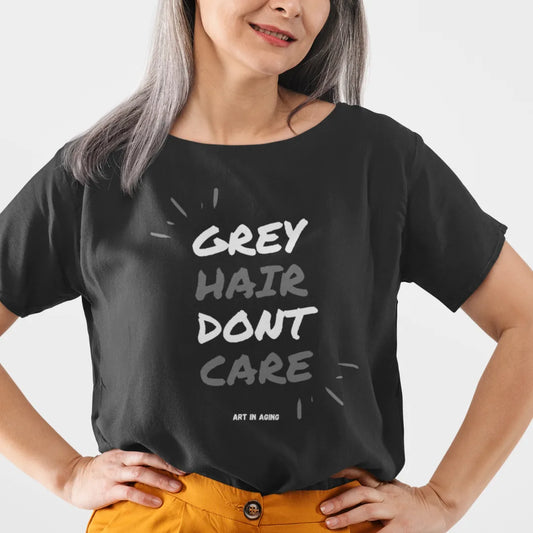
They stop performing for audiences that don't see them. The energy spent maintaining visibility for people who have already decided not to look is better redirected. The women who say this most clearly are the ones who have gone grey, stopped uncomfortable dressing, stepped off career ladders that weren't going anywhere, and generally stopped auditioning for rooms that weren't interested.
They find and build communities that do see them. The silver sisters movement. Age-positive communities online and in person. The book clubs, hiking groups, professional networks, and creative communities of women over 50 who are actively doing things and want company. These communities don't make the cultural invisibility disappear — but they create a counter-reality that matters.
They name it out loud. There is power in saying: I see what is happening here, and I am not going to pretend it is normal. Women who name the invisible-woman phenomenon — to friends, to colleagues, to their daughters — make it easier for everyone to see it clearly and respond to it.
They show up anyway. In the meeting, in the conversation, in the space. Not aggressively, not apologetically — just fully. Taking up the space that is theirs.
The Difference Between Invisible and Unseen
There's a distinction worth making. Invisible is something done to you — by culture, by context, by other people's limited vision. Unseen is a choice to withdraw, to make yourself smaller, to participate in the invisibility that others are trying to assign.
The women who refuse the invisible woman label are not refusing the reality of ageism. They're refusing the invitation to collude with it. They are choosing to remain fully present and visible even in contexts that would prefer they weren't.
That refusal is, in its own way, a political act. And it is available to every woman who decides to take it.
I Am Not Invisible
Three words that push back against the whole apparatus. Not a declaration that nothing has happened, but a refusal to accept the verdict.
Art in Aging makes a shirt that says exactly this — for the woman who wants to wear the pushback out loud.
Ships worldwide. Printed to order.
Read next: Feminism and Aging — Rewriting the Narrative →
The Silver Sister Community
Ready for more than blog posts?
This is the room where hundreds of women talk about exactly this — going grey, positive aging, and life on the other side of the dye job. Weekly lives, member stories, and real conversations.
See what's inside → Founding membership: $27/month