If you're in your 30s and noticing silver strands cropping up on your scalp, you're not alone—and you're definitely not imagining it. Early greying is more common than most people realize, and it can feel genuinely disorienting when it happens to you. One day you're thinking about your skincare routine, and the next, you're staring at your roots wondering if the universe is playing a practical joke.
The self-consciousness that comes with early greying is real. You might feel like you're aging "too fast," or worry that grey hair at 30-something reads as unkempt rather than intentional. You might be caught between curiosity about what you'd look like grey and anxiety about how the world would perceive you. And if you're considering actually embracing it instead of covering it up, the questions multiply: Is it too early? Will I regret it? What will people think?
Here's what matters: going grey in your 30s doesn't mean anything is wrong with you, and it doesn't obligate you to do anything you don't want to do. Your grey hair is a biological fact, not a character flaw or a sign that time is running out. Whether you decide to dye it, let it grow, or blend it somewhere in the middle, the choice is entirely yours—and it's worth making deliberately rather than out of habit or fear.
Why Grey Hair Shows Up Early (And It's Not Because You're Stressed)
Let's start with the science, because understanding what's happening takes some of the mystery—and the shame—out of it. Your hair gets its color from melanin, produced by cells called melanocytes in your hair follicles. These cells gradually slow down and eventually stop producing melanin as you age. When there's no melanin, your hair grows in white. What you see as "grey" is actually a mix of white and pigmented hair.
The timing of when this happens is almost entirely determined by genetics. If your parents or grandparents went grey early, you likely will too. Some research suggests that ethnicity also plays a role—people of European descent tend to grey earlier on average than people of Asian or African descent—but individual variation within any group is enormous. The bottom line: your genes basically wrote the schedule, and there's not much you can do to change it.
That said, a few factors can accelerate greying slightly. Vitamin B12 deficiency, copper deficiency, and some autoimmune conditions like vitiligo or alopecia areata can speed up the process. If you're concerned about deficiencies, it's worth mentioning to your doctor. Smoking also appears to increase greying risk, which is just one more reason among many to quit if you do. But the pervasive myth that stress causes grey hair? That's largely folklore. Your stress levels didn't cause this. Your DNA did.
The Reality of Early Greying: What People Actually Feel
Before we talk logistics, let's talk about what this might feel like, because the emotional component matters as much as the practical one. Discovering early grey hair can trigger a mini identity crisis. You might feel like your appearance is now "announcing" your age before you're ready, especially if you live in a culture that treats 30-something women as if they should still look 25. There's also the subtle grief of watching your hair change in a way you didn't choose and can't easily reverse without ongoing maintenance.
Some women in your position describe feeling oddly invisible in a different way—not like they suddenly look old, but like they're no longer "young" in the eyes of others, which can shift how people interact with them. Others feel liberated by the visible truth of their age. Most people experience something in between: ambivalence, curiosity, occasional frustration, and moments of unexpected acceptance.
The self-consciousness you might feel is also tied to real social messaging. Women's grey hair is still often coded as "let go of yourself" or "given up," while men with grey hair are "distinguished." That's not a personal failing on your part; that's a cultural problem. It's worth naming that the resistance you feel to your grey hair might be partly internal, and partly external noise that doesn't actually serve you.
Deciding: Dye, Go Grey, or Blend
You have three basic options, and none of them is the "right" answer—only the right answer for you right now, which might change later.
Option One: Keep Dyeing Your Hair
This is a perfectly legitimate choice. If you love the color you've been, or if you want to experiment with new colors, you can absolutely continue dyeing your hair. The commitment is ongoing maintenance—roots every 4 to 8 weeks, depending on your natural growth rate and how visible the regrowth is. Budget accordingly, both time and money.
If you go this route, consider switching to gentler dyes if you haven't already. Permanent color is harsher on your hair than demi-permanent options, and your hair becomes more fragile as you age. A good colorist who specializes in maintaining dyed hair on mature clients can make a significant difference in keeping your hair healthy. And if you ever change your mind, stopping is always an option—it just means growing out your roots deliberately rather than accidentally.
Option Two: Stop Dyeing and Go Fully Grey
This means letting your natural grey grow in completely, which takes time. The grey hair timeline depends on how fast your hair grows and what percentage of it is already grey, but expect the process to take anywhere from 6 months to 2 years to reach a point where it looks intentional rather than patchy.
Going this route at 30-something has an advantage: you typically have more stamina for growing out awkward stages, more flexibility with styling and fashion choices to make the transition work, and more time to enjoy the final result. Many women also find that going fully grey in their 30s sets a precedent—you're established as "the woman with grey hair" early enough that it becomes part of your identity before anyone can frame it as decline.
Option Three: Blend or Highlights
You can also meet yourself in the middle with strategically placed highlights or lowlights that blend your grey with remaining color, creating a transition that's faster and less jarring than growing it all out. This is a smart option if you want to test-drive the grey aesthetic without committing fully, or if you like having some dimension in your hair. Some women stay in this "blended" place indefinitely, and that's fine too.
The Practical Steps If You Decide to Go Grey
If you're leaning toward actually making the shift to grey, here's what helps.
Get a Good Haircut First
Before you stop dyeing, get a professional cut that works with your hair texture and the grey you're about to reveal. A strategic cut can make the growing-out phase look way more intentional. Ask your stylist about styles that work well during the transition and that will suit your grey hair once it's fully grown in. Shorter hair generally looks less patchy during the grow-out phase, but that's not a hard rule.
Invest in the Right Products
Grey and white hair has different needs than pigmented hair. It's often coarser and more prone to yellowing. A good shampoo for grey hair can keep it looking bright and feeling soft. Look for sulfate-free options and consider a purple-toning shampoo if your hair trends yellow. This is worth the small investment in your appearance and comfort.
Plan for the Awkward Phase
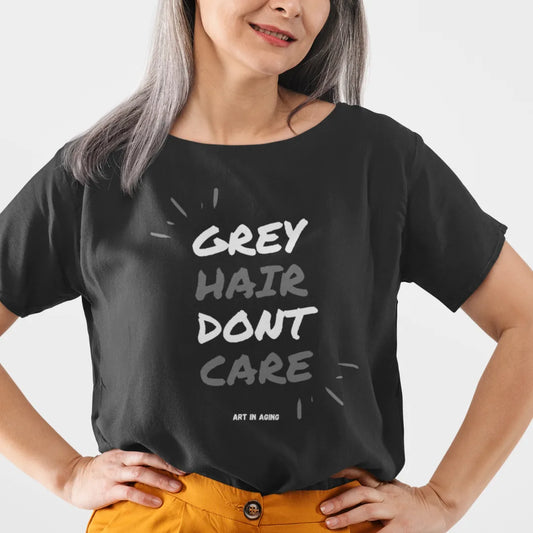
There will probably be a few months where your hair looks genuinely weird—splotchy, flat, or just... off. Knowing this is coming makes it less demoralizing when it happens. Strategies include: strategic styling, creative hats or scarves, trying new haircuts or colors in the parts that are already grey, or even embracing the aesthetic of "intentional root situation" while you're in it. Silver sister shirts and confident styling choices can make the transition feel deliberate rather than accidental.
Know What to Wear with Grey Hair
Once your grey is coming in, you might notice that colors that flattered you before hit differently. This is completely normal and fixable. What to wear with grey hair is partly personal preference and partly about undertones, but experimenting can be genuinely fun. Many women find that grey hair actually gives them more versatility with color, not less.
Handling Other People's Opinions
Once people notice you're going grey, some of them will have thoughts. "You look tired." "You should dye it." "You're too young for that." "You're so brave." That last one especially—the forced admiration—can feel almost condescending, as if choosing to have grey hair is a radical act requiring applause rather than just... a thing you decided to do.
You don't owe anyone an explanation or a defense. If you feel like explaining, you can say something like, "I'm trying something new" or "I'm curious what I look like" or nothing at all. If someone is genuinely unkind about it, you're allowed to shut that down. And if you change your mind halfway through and dye it again, that's not failure or backtracking—that's just information about what you actually want.
One thing that helps: finding your people. The silver sister community exists specifically for women navigating visible age, and there's real power in being around other women who've made this choice and aren't sorry about it.
The Larger Picture: What Early Greying Actually Means
Here's what early greying doesn't mean: you're old, you're less attractive, your best years are behind you, or your body is betraying you. It means you inherited a particular genetic trait. That's the entire story.
What it might mean, depending on how you respond, is that you get to decide early whether you're going to spend your time and money covering your natural appearance or embracing it. You get to notice, in your 30s, that the culture's messages about how women should look don't have to be your messages. You get to see what happens when you stop performing youthfulness for an audience and start making choices that actually feel true to you.
This is all larger than hair, obviously. It's about feminism and aging, about refusing to apologize for being a person with a visible body that changes over time. Early greying at 30-something is an early invitation to opt out of that apology. You don't have to take it. But you're allowed to.
Whether you dye your hair, go grey, or blend somewhere in the middle, make the choice deliberately. Pay attention to what you actually want rather than what you think you should want. And know that this choice, whatever it is, doesn't define you or limit your