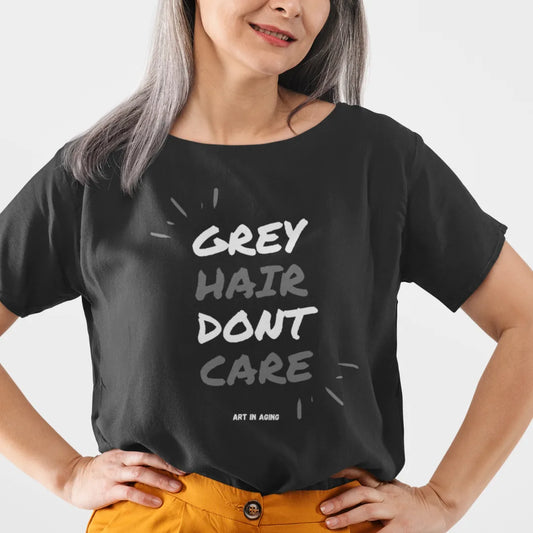
Short grey hair is having a moment—but more importantly, it's having a staying moment. If you've made the leap to silver, or you're thinking about it, you've probably noticed that short hair can either look effortlessly chic or accidentally like you gave up. The difference isn't luck. It's intentionality.
The good news: styling short grey hair isn't complicated. It's also not about fighting your texture or pretending you're thirty. It's about working with what you have—the cut, the color, the texture—and making choices that feel true to you. This guide covers the cuts that actually work, the styling tricks that make a real difference, and the everyday maintenance that keeps your silver looking sharp rather than neglected.
The Right Cut Makes Everything Easier
Let's start with the foundation: your haircut. Because here's the thing—grey hair often has a different texture than the hair you had when you were younger. It can be coarser, wavier, or stubbornly straight depending on your hair type. A good cut isn't fighting that texture. It's using it.
The most versatile short cuts for grey hair are textured, not blunt. A textured crop, a shaggy pixie, or a choppy bob (yes, even short) work because they create movement and dimension without requiring you to blow-dry your hair into submission every morning. If your stylist cuts with razor or point-cut techniques, you'll have shorter hair that actually moves and doesn't sit flat against your head like a helmet. Blunt cuts can work, but they demand more styling effort and show every hair out of place—which matters more when your hair is silver and highly visible.
Length matters too. Short doesn't mean millimeter-short if that's not your vibe. A cut that sits somewhere between your ears and your jaw gives you more styling flexibility than a super-cropped pixie and more modern movement than hair that's just long enough to tuck behind your ears. The sweet spot is usually 1–3 inches on top, tapered or layered, with a clean line around the back and sides.
Talk to your stylist about your hair's actual texture and your actual lifestyle. If you're not a person who enjoys styling, don't let yourself be talked into a cut that requires blow-drying and product every day. Grey hair is confident hair; it shouldn't feel like a chore. A cut that works with your natural wave pattern or straightness will always look intentional.
Texture and Styling Products: Keep It Simple
One of the benefits of short hair is that you don't need much to make it look deliberate. But some texture helps, especially with grey, which can sometimes look a bit flat without it.
A lightweight styling cream or texturizing spray is usually enough. Apply to damp hair, work it through with your fingers, and let it air-dry or use a blow-dryer on a lower heat setting. The goal isn't to create a specific style—it's to add grip so your hair has shape and movement rather than lying flat. Sea salt spray works for this too, though it can be drying if you use it daily; save it for days when you want more texture or are heading out for the evening.
If your grey hair is fine or thin, skip heavy creams and go for a volumizing mousse or a dry texture spray instead. These add lift without weight. If your hair is thick or coarse, a heavier styling cream or even a light pomade can define texture and add shine. The rule: your styling product should feel nearly invisible on your hair, not like you're wearing product.
One honest note: grey hair can sometimes look yellowed or brassy, especially if you're in the sun or using the wrong water. A grey hair shampoo with a slight violet or purple tone (called toning shampoo) helps keep that silver looking bright. Use it once a week or as needed. It's not about turning your hair purple—it's about neutralizing warmth that makes grey look dingy.
Face Shape and Styling Strategy
This is where short hair styling gets personal, because the right cut and styling approach depends on what flatters your face, not what's trendy in general.
For round faces: You want height on top and tapered sides. This creates the illusion of length. A textured crop with more volume at the crown and slightly shorter sides looks sharper. Avoid styles that are fluffy all over or have volume at the sides—they emphasize width. When styling, focus on creating lift at the roots; a little texture spray on damp hair, scrunched upward and air-dried, does the job.
For square or angular faces: You can actually wear more texture and movement because your strong jawline and cheekbones can handle it. A shaggy pixie or choppy layers that fall around the face soften angles without looking weak. A side part can also add interest. When styling, let texture be your friend—don't flatten it down.
For oval faces: You're lucky. Most cuts work. Experiment with texture, length, and styling to find what feels right. A sleeker crop, a longer pixie, a textured bob—you have options.
For heart-shaped faces: Balance a wider forehead with texture and movement around the jawline. Longer layers that frame the face or a side-swept style works well. A blunt short cut might emphasize a narrow chin; softer texture usually looks better.
The styling trick that works across all face shapes: use your fingers, not a brush, when styling damp hair. This creates texture and avoids the slicked-back look that can emphasize every line on your face. Scrunch, tousle, and let gravity and air-drying do some of the work.
Managing Grey Hair's Texture Challenges
Grey hair isn't all smooth sailing. Some people find their grey hair is coarser and more prone to frizz. Some find it's wavier than their dark hair was. Some find it's drier. These aren't problems to hide—they're just information that changes how you approach styling.
If your grey hair is frizzy, a light serum or anti-frizz cream applied to damp hair before styling can help smooth the cuticle. You don't need much; serum is easy to overuse and can look greasy. A dime-sized amount, worked through the ends and mid-lengths, is usually enough.
If your grey hair is wavier or curlier than you expected, embrace it. A cut with texture and layers will look intentional and modern with wave. If you want to smooth it out, a lightweight straightening balm or smoothing cream works, but honestly, movement in short grey hair often looks better than ultra-sleekness. It reads as confidence, not as damage control.
If your grey hair is drier, a hydrating shampoo and conditioner matter more than they might have before. But be careful not to over-condition, which can make short hair look limp. A good rinse with cool water at the end of washing helps seal the cuticle and add shine.
Daily Styling: Making It Stick
The reality of short grey hair is that it's visible. That's not a bad thing—it's kind of the point. But it does mean that how you style it in the morning makes a difference in how it looks all day.
On wash days, style your hair while it's damp, not soaking wet. Damp hair is more cooperative and holds product better. Apply your styling product of choice, use your fingers or a fine-tooth comb to distribute it evenly, and let it air-dry for 80 percent of the drying time before blow-drying if you choose to use heat at all. This method minimizes damage and looks more natural.
On non-wash days, a dry texture spray or dry shampoo (designed for grey hair, not the dark-hair kind that leaves residue) revives texture and adds grip. A few spritzes, finger-tousled through, can make day-two hair look as intentional as day-one.
Sleeping on your side or in a silk pillowcase reduces friction and frizz, which matters more with shorter hair where flyaways are visible. A silk pillowcase is a small investment that actually makes a difference.
If you're dealing with style slippage (your hair looking flat by midday), a small amount of texturizing cream or volumizing mousse applied only to the roots in the morning can help. The trick is applying it to damp roots before blow-drying—the heat sets the product and the volume.
Maintenance: Keeping It Sharp
Short hair grows out fast, and that matters when your style depends on a good cut. Plan on a trim every 4–6 weeks to keep your shape sharp. This isn't vanity; it's the difference between "fresh cut" and "overdue for a trim." A good stylist can do a maintenance trim quickly and affordably, and it's worth the investment.
Between trims, a few stray hairs are normal, but if you find yourself seeing flyaways constantly, a small trimmer for edges or a few strategic snips can tidy things up. You don't need to be a stylist to do this—just be conservative. You can always cut more; you can't uncut.
Consider your lifestyle when thinking about cut maintenance. If you travel frequently or have unpredictable schedules, a cut that looks good a little grown-out (like a shaggy pixie) might be easier than one that depends on precision (like a geometric crop). There's no right answer—just what works for your actual life, not your imagined one.
Color Maintenance for Silver
If you're part of the going grey movement, you've probably already made peace with the fact that your hair will shift colors and textures as it grows in. But maintaining the appearance of intentional silver (rather than accidental yellowed) does take some attention.
A violet or purple-toning shampoo is your main tool here. Use it once or twice a week, depending on how much brassing you see. It's not about turning your hair purple; it's about neutralizing warm undertones that make silver look dingy. If you spend time in the sun or chlorine, you might need it more frequently.
Some people find that a semi-permanent silver or ash toner applied every few weeks keeps their grey looking more deliberately silver. This is optional, but if you notice your grey shifting toward yellow or gold and it bothers you, a gloss keeps it looking intentional. The investment is small, and it makes a visible difference.
Styling for Different Occasions
The beauty of short grey hair is that it scales. Here's how to make it work for everything from Tuesday to the event you actually want to look exceptional for.
Everyday: Texture spray and fingers. That's it. The texture spray gives you shape; your fingers apply it and let the styling look natural. You're done in two minutes.
Work or social occasion: Add a side part and slightly more styling product for definition. A light pomade or cream applied to damp hair and