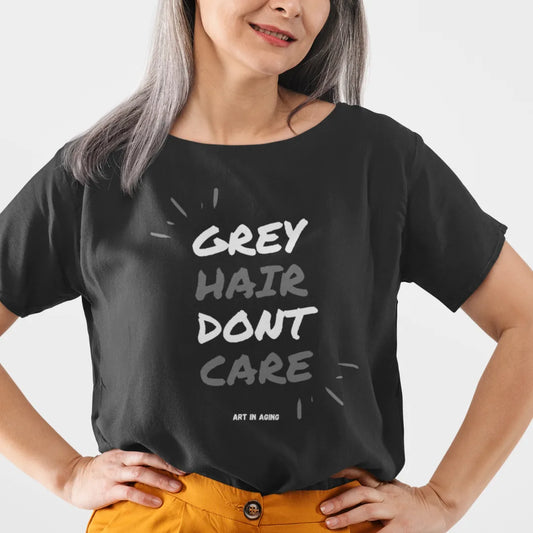
We spend so much time bracing for what we'll lose—the metabolism, the smooth skin, the cultural relevance—that we miss what we actually gain. And it's not the sanitized Hallmark stuff. It's not about finding inner peace or embracing your authentic self (though those can happen). It's messier and more useful than that. The gifts of getting older are the ones that sneak up on you: the ability to say no without explaining yourself. The sudden clarity about what actually matters. The freedom that comes from caring less about what strangers think and more about what you know to be true.
Related: see our newer guide on Pelvic Floor Health After 50: The Thing Nobody Talks About.
Nobody markets these to you. No skincare company is going to sell you a serum that costs $200 and promises to deepen your discernment or give you the spine to set a boundary. But these gifts are real, and they're worth talking about—not as consolation prizes for aging, but as actual, tangible improvements to how you move through the world.
Permission to Stop Performing
There's a particular freedom that comes sometime around 50 when you realize that you've spent decades operating under an exhausting rulebook that nobody ever formally gave you. You know the one: smile more, take up less space, be agreeable, make yourself smaller, laugh at jokes that aren't funny, compliment people you don't like, manage other people's comfort before your own.
One of the greatest gifts of getting older is that this rulebook starts to feel optional. Maybe it's because you're statistically more invisible in a youth-obsessed culture, so the performance matters less. Maybe it's because you've seen enough of life to know that the people worth keeping around are the ones who like you when you're not performing. Or maybe you're just exhausted and decide the cost of the act isn't worth the payoff anymore.
This doesn't mean becoming unkind. It means you can be direct without apologizing. You can have opinions without prefacing them with "I might be wrong, but…" You can leave a room when you're bored. You can ask for what you want without making it sound like a question. You can wear what feels good instead of what photographs well. If you're in the silver sister community, you already know this feeling—it's part of why the silver sister movement resonates so deeply. Women who are done performing their youth are free to actually be themselves.
The practical gift here is time. Think about how many hours you spent worrying about your image, curating your persona, managing how you were perceived. Now imagine having that time back. That's not metaphorical. That's actual hours you can spend on things that matter to you.
The Clarity That Comes From Pattern Recognition
If you've been alive for 50 years or more, you've seen things repeat. You've watched people you love make the same mistakes. You've made those mistakes yourself and learned from them. You've seen what happens when you choose ambition over relationships, or relationships over ambition. You've watched friendships dissolve and reform. You've had enough time to see the consequences of your choices, which is something younger people simply don't have.
This is one of the most underrated gifts of getting older: you develop an almost preternatural ability to see through bullshit. Someone tells you a story about why they've been distant and you know, without being told, whether you believe them or not. A situation starts to develop and you can see three moves ahead because you've watched this game play before. You spot the manipulative dynamic, the bad business deal, the relationship that's already failing even though everyone else is still optimistic.
This clarity isn't always comfortable. Sometimes it means being the person at the table who sees the problem nobody wants to acknowledge yet. But it's genuinely useful, and it protects you. It keeps you from being exploited by people who count on your goodwill or naiveté. It helps you make better decisions about money, careers, relationships, and how you spend your irreplaceable time.
The gift is that you can finally trust your own judgment. You don't need external validation as much because you have enough data points now to know when something is off. That's not arrogance. That's accumulated wisdom, and it's one of the most valuable things a person can have.
The Economics of Caring Less
Getting older comes with a shift in what costs you money and what doesn't. Some things get more expensive—healthcare, depending on where you live—but other things get dramatically cheaper, and nobody talks about this enough.
You stop buying things to be someone else. You stop subscribing to the idea that you need to dress like the women in magazines. You stop feeling like you need to keep up. If you're going grey, you cut the hair dye budget entirely. You stop coloring your hair every six weeks and suddenly you have $100-200 a month you didn't have before. You realize you don't need seventeen shades of eyeshadow or the expensive face cream everyone's talking about. You can dress in the clothes that work after 50 and not feel the need to constantly refresh your wardrobe because fashion changed.
More importantly, you stop paying for experiences that don't serve you. You don't go to networking events that bore you. You don't maintain friendships out of obligation. You don't buy the premium gym membership if you know you're not going. You don't pretend to like restaurants you don't like just because they're trendy. This might sound small, but when you add it up—the money not spent, the time not wasted, the emotional energy not depleted—it's substantial.
The gift is that your life gets more aligned with your actual values and preferences, and that usually costs less, not more. You become naturally more efficient because you're not maintaining a facade.
Access to Your Own Anger
Women are taught from childhood that anger is unbecoming, unladylike, unattractive. We're supposed to be pleasant. We swallow our anger, rationalize it away, or redirect it into being hard on ourselves. By the time many women reach 50, they're so disconnected from their anger that they barely recognize it.
One of the most unexpected and genuinely empowering gifts of getting older is that you start to feel your anger again—and you realize you actually need it. Anger is data. It tells you when a boundary has been violated. It tells you when something is unfair. It tells you when you've been taken for granted. It tells you when you need to make a change.
When you're older, you're less afraid of anger because you've watched enough people experience enough consequences to know that feeling angry doesn't make you a bad person. It makes you someone who's paying attention. Feminist theorists and therapists have written extensively about this—the way women finally get access to healthy anger in midlife and beyond, and how that changes everything. It changes what you tolerate. It changes what you ask for. It changes which people stay in your life.
This isn't about becoming bitter or hostile. It's about being able to access a legitimate emotion that women are trained to suppress, and using that access to protect yourself and advocate for what you need. That's a gift that has real consequences for how your life unfolds.
The Luxury of Not Knowing Everything
This one takes some explanation because it sounds backward. When you're young and ambitious, there's an intense pressure to know things, to be an expert, to have an opinion, to have the right answer. You're building a reputation. You're establishing authority. You're trying to prove yourself.
One of the unexpected gifts of getting older is that you can finally afford to say "I don't know" without it threatening your credibility. You can be curious about things without needing to immediately master them. You can change your mind. You can try things that you might not be good at, just because they interest you. You can read a book without needing to have a take on it. You can admit when you're wrong or ignorant and have that be totally fine.
This is a genuine luxury. It takes the pressure off. You can explore things just because they appeal to you, not because they'll build your brand or advance your career. You can be a beginner at something at 55 and genuinely enjoy the process of learning without the anxiety about whether you'll ever be good enough.
Practically, this means you can pursue interests and hobbies that matter to you—learning a skill that's just for you, taking a class where you're not the expert, having conversations with people who know more than you do and being genuinely interested instead of defensive. It's one of the more underrated sources of actual joy in the later years.
Reclaiming Your Attention
By the time you're over 50, you've had decades to notice who and what pulls your attention, and more importantly, what that costs you. You've probably spent years being absorbed by other people's needs, expectations, and drama. You've paid attention to trends, to marketing, to what other people think you should be doing.
One of the most concrete gifts of getting older is that you can finally be selective about where your attention goes. You don't have to read the comments. You don't have to keep up with the drama. You don't have to engage with people who don't serve you. You can unfollow, block, exit, and walk away with barely a twinge of guilt.
This matters because attention is a finite resource. Where you put it is where your life goes. When you get older and stop automatically distributing your attention based on obligation or insecurity, you actually get to live your life instead of managing everyone else's. You can spend your attention on the people you actually love, the work that actually interests you, the things that actually matter to you.
It sounds simple but it's revolutionary. Try doing it consciously: for one week, notice every time you're paying attention to something because you think you should, versus something that genuinely interests you. The gap is probably shocking. This is the gift—the ability and permission to close that gap.
How to Actually Claim These Gifts
The gifts of getting older don't arrive automatically. They're available, but you have to be willing to reach for them. Here's how to actually claim them:
- Notice what you're doing out of habit versus choice. Start paying attention to the things you do, buy, say, and wear that you're doing because you always have or because you think you should. Write them down. Then ask yourself: do I actually want to keep doing this, or am I doing it for a version of myself that doesn't exist anymore?
- Practice saying no without explanation. Start small. It doesn't have to be a major boundary. Just a simple "No, that doesn't work for me" or "I'm going to pass." Notice how you feel. Most of the time, nothing bad happens. Your credibility doesn't crater. People don't suddenly hate you. It gets easier.
- Build community with people who are doing this too. When you're around other women who refuse to apologize for aging, who are confident in their grey hair, who are living on their