I turned 52 last month and nobody threw me a party. Not because I didn't deserve one, but because I stopped expecting the world to mark the occasions that matter most to me. And you know what? That's when everything got lighter.
For years—decades, really—I operated under a set of unspoken rules I never actually agreed to. Show up smaller than you are. Keep your opinions palatable. Color the grey away before anyone notices it. Be "age-appropriate" in ways that somehow meant looking less like yourself. Apologize for taking up space, for having wrinkles, for not being 35 anymore. I didn't notice how heavy that weight was until I finally set it down.
The funny thing about your 50s is that they sneak up as a kind of permission slip you weren't expecting. Not because age itself is magic—it isn't. But because at 50, something shifts. You've been through enough to know what actually matters. You've failed at enough things to understand that survival is built into you. You've stopped waiting for anyone else's approval because you finally figured out that it was never going to arrive on schedule.
This is what people mean when they talk about the freedom of getting older. It's not about looking younger or feeling invincible. It's about the quiet, steady realization that the costs of pretending have gotten too high, and the cost of being yourself has gotten surprisingly low.
The Permission You Don't Need to Ask For
I spent my 40s in a kind of anxious maintenance mode. I dyed my hair every six weeks to cover the silver. I bought clothes that didn't quite suit me because they were "flattering" by someone else's math. I nodded through conversations where people half my age explained my own life to me. I kept my voice measured, my opinions soft, my visibility carefully managed.
Then I hit 50 and something broke in the best possible way: my tolerance for bullshit.
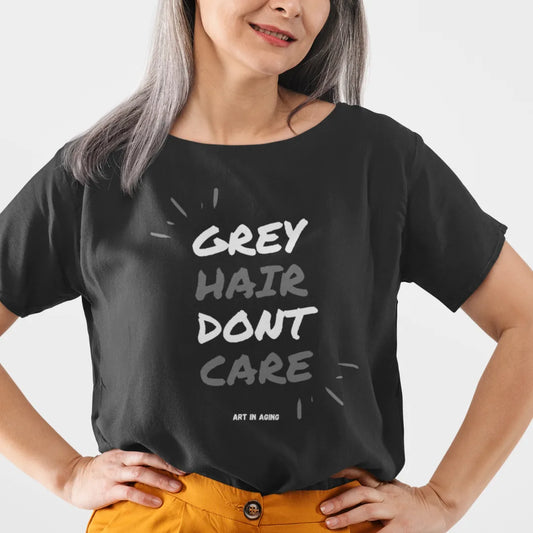
It wasn't dramatic. I didn't wake up enlightened. But somewhere between 50 and 52, I started making choices based on what I actually wanted instead of what I thought I was supposed to want. I stopped dyeing my hair and let the silver come in. I gave away clothes that didn't make me feel like myself. I started saying "I don't know, but I want to find out" instead of pretending I had all the answers. I wore red lipstick to the grocery store because it made me happy, not because I was trying to prove anything.
And here's what shocked me: nothing bad happened. No one revoked my membership to adulthood. My relationships actually got better because I stopped performing a version of myself that was exhausting everyone, including me. The people who mattered liked me more when I was actually there instead of a carefully managed approximation.
This is what freedom tastes like at 50. It's not that you stop caring what anyone thinks. It's that you finally know which people's thoughts are worth the space they take up in your brain. And you realize that the answer is: far fewer than you'd been spending energy on.
The Silver Hair Rebellion Nobody Expected
Let me be specific about going grey, because it's become something of a marker for me—not because grey hair is inherently revolutionary, but because of what it represents in a world that has spent considerable energy convincing us to hide it.
When I started the grey hair transition, people had opinions. My mother asked if I was going through something. A woman at work suggested I looked tired. (I wasn't going through anything except the perfectly ordinary experience of aging, and I was—as usual—tired, just not for the reasons she implied.) A friend sent me an unsolicited article about grey hair shampoo as if it were a public service.
But here's what actually happened: as my silver came in, I felt less interested in managing other people's discomfort about it. The transition timeline gave me permission to be in process—to not have it all figured out. I got better at shrugging off the commentary. I started noticing other women with grey hair, really looking at them, seeing how some of them glowed with an ease I recognized as freedom. I joined the silver sister community and realized I wasn't alone in this quiet rebellion.
The real revolution wasn't aesthetic. It was this: I stopped treating my body like a problem to be solved. I stopped seeing aging as something to optimize away. I let myself be exactly as I am, which apparently is 52 and silver and still figuring things out. And in doing that, I accidentally gave myself an enormous gift: my own attention back. All that energy I'd been spending on covering up evidence of my life? I got to use it on things that actually matter to me now.
What Nobody Tells You About Your Own Company
There's a particular kind of loneliness that can happen in your 40s—not from lack of people, but from spending so much time as a supporting character in other people's narratives. You're managing everyone else's needs, expectations, and opinions of you. It's exhausting in a way that's hard to articulate because it feels normal. It feels like just being a woman.
By 50, at least for me, I was tired enough to stop. And in that stopping, something unexpected happened: I started to actually enjoy my own company.
This might sound like a small thing, but it's genuinely one of the most significant shifts of my 50s. I can take myself to dinner. I can sit with a book and let an afternoon dissolve without guilt. I can be alone with my own thoughts—which are sometimes boring and sometimes brilliant and are, in any case, mine—and that's enough. I don't need to be entertaining anyone, including myself. I don't need to be productive or "making the most" of my time. I can just be.
This is freedom. Not in an Instagram-caption way, but in the deep, practical way that means you stop seeing your own existence as something that needs justification. Your 50s give you this if you let them. They say: you've been here long enough. You've done enough. You can stop proving yourself now.
The relationships that remain in this space are better. Friendships deepen. You stop spending time with people out of obligation. You become less interesting to people who only liked the performing version of you—and that's fine, because you're more interesting to yourself now, and that matters more. You develop a kind of quietness that some people mistake for aloofness but is actually just confidence. You know who you are. You're not constantly auditioning.
The Practical Side of Not Giving a Damn
I should be clear: this isn't about becoming a person who doesn't care about anything. It's the opposite. When you stop caring about the things that don't matter, you can care deeply and actually consistently about the things that do.
In my 50s, I care more about how I spend my time. I care more about whether my work feels meaningful. I care about the people I love with a clarity that feels almost ruthless—I can't afford casual friendships anymore when I've realized how finite my time is. I care about my body, but differently: not because I'm trying to look a certain way, but because I want to actually use it, move through the world in it, feel good in it.
This is the secret that shows up when you stop performing: you become more discerning, not less. You become more serious about your actual life, not less. You just stop wasting energy on the appearance of seriousness.
For me, that's meant finally dressing in a way that makes sense to my actual body and actual life. It's meant saying no to things I don't want to do. It's meant reading books nobody assigned me. It's meant learning skills purely because I'm curious. It's meant not explaining myself constantly—to friends, family, colleagues, or strangers online. My life is not a brief that needs defending.
The Invisible Wall You Walk Through
There's a particular kind of invisibility that arrives for some women over 50. You might have experienced it: the moment when you realize that you've become less interesting to the wider world. Your value, which you'd been taught was partially about your youth or your appearance or your availability, has been quietly downgraded.
This is where a lot of people find despair. And I understand that. I felt some of it myself.
But here's the other side of that same wall: once you're on the other side of it, you're actually free in a way you weren't before. The world stops looking at you as closely. And when the world stops looking at you as closely, you can actually do things. You can make decisions based on what you want, not what you want to look like wanting. You can take risks. You can be wrong without it being a referendum on your femininity or your relevance.
Some of my best decisions have happened on the other side of that wall. I started a project I would have been too self-conscious to start in my 30s. I took a class and wasn't worried about looking stupid. I showed up differently in conversations because I wasn't managing whether I seemed sharp or likeable. I became less palatable and more real.
The invisibility, which felt like loss initially, has been a kind of gift. Not because women should be invisible, but because for me, personally, the freedom from being constantly seen and evaluated has been worth the trade.
What You're Actually Building
The freedom you feel settling in during your 50s isn't accidental. It's built on a foundation of things you learned in your 30s and 40s, even the hard things. The failed relationships taught you something about what you actually need. The professional disappointments taught you that your worth isn't determined by external achievement. The friendships that ended taught you to value the ones that lasted. The years of managing your appearance taught you what actually matters about how you move through the world.
All of that lives in you now. And it's valuable in a way that nothing else is, because it's real. It's tested. You didn't read it in a book; you lived it.
Your 50s are an opportunity to actually use all that knowledge. To stop rehearsing for a life and start living it. To be in your own story as the main character instead of the supporting player. To let your hair be silver if you want. To wear what makes you feel like yourself. To say what you actually think. To spend time with people who feel like home. To do work that matters to you. To make choices that serve your own life, not the idea of what your life should look like.
This is the freedom people are talking about when they talk about aging. It's not about being young longer or looking good for your age or any of that. It's about finally, after decades of trying to be palatable and perfect, getting to just be yourself. It's about the quiet understanding that you