If you've ever heard someone describe a woman as a "nonna," you've witnessed a word carrying centuries of weight, respect, and unapologetic power. It's not just Italian for grandmother. It's an entire philosophy wrapped up in four syllables—one that celebrates a woman who has lived, who knows things, who feeds people, who doesn't make excuses for taking up space. In a culture obsessed with youth, nonna reminds us that age isn't something to survive; it's something to become.
Related: see our newer guide on What Does Oma Mean? Celebrating the German and Dutch Grandmother.
The word itself comes from Italian, a diminutive form of "nonna" that emerged from the Latin "nonna," originally used for older women in convents. But somewhere along the way, it transformed into something far richer: an honorific, a title, a way of being in the world. If you're curious about what nonna really means—beyond the dictionary definition—you're asking about a whole different thing. You're asking about authority, continuity, and the particular kind of power that only comes with age.
The Literal Meaning: More Than Just a Word
"Nonna" is simply the Italian word for grandmother. It's straightforward in translation but profound in practice. In Italian families, a nonna isn't just a relation; she's often the keeper of recipes, traditions, family stories, and—let's be honest—the unspoken rules everyone actually follows. The nonna is the one who feeds you without asking if you're hungry because she already knows the answer. She's the one who notices when something is wrong and asks about it directly, without the social niceties that younger people often hide behind.
What makes "nonna" different from simply saying "grandmother" is the intimacy and specificity it carries. In English, "grandmother" can feel formal, distancing. "Grandma" is affectionate but sometimes diminishing. But "nonna" contains both warmth and respect in the same breath. It acknowledges that this woman has earned something through time and experience. She's not apologizing for her grey hair or her age spots or her opinions. She's simply here, taking up the space she's always occupied, feeding whoever shows up at her door.
In Italian culture specifically, the nonna holds particular weight. She's the anchor of the family, the one whose kitchen is the heart of everything, the one who remembers what your mother forgot and what your grandmother's grandmother did before that. She's not relegated to a secondary role in family life—she's often the central figure, the one everyone gathers around, the one whose voice carries authority because she has lived long enough to know what matters.
The Cultural Significance: What Nonna Represents
To understand what nonna means, you have to understand what Italian culture decided a grandmother should be. Unlike many Western societies that tend to marginalize older women or treat them as optional extras, Italian culture places the nonna at the very center of family life. She is not invisible. She is not retired from mattering. She is, in many ways, more relevant than ever.
The nonna represents continuity. She is the living bridge between generations—the one who taught your mother how to make pasta by hand, who taught your mother how to love, and who now teaches you both by example what it means to age without shrinking. She is the keeper of family memory, the one who can tell you why your family does things the way they do, the one who remembers the stories that bind you together. In a world that treats the past as disposable, she is proof that history matters. That roots matter. That the people who came before us matter.
Beyond the family specifically, nonna represents a kind of authority that age actually grants rather than takes away. She has opinions and she shares them. She notices when you're not eating enough. She tells you what she thinks, and somehow, you listen—not because you're obligated, but because she's earned the right to speak plainly. She doesn't soften her words for comfort or manage other people's feelings at the expense of truth. This is not cruelty; this is clarity. This is what it looks like when a woman stops performing politeness for the world and simply lives according to her own values.
The nonna also represents abundance. Her kitchen is legendary not because she's a professional chef but because she cooks with intention, with generosity, with the understanding that feeding people is an act of love. She doesn't cook fancy meals for Instagram; she cooks real meals that nourish, that satisfy, that say "I know you, I see you, I've made this for you." There's a particular kind of confidence in that—the confidence of someone who knows her own worth and doesn't need external validation to prove it.
The Attitude: How to Think Like a Nonna
If you're drawn to the concept of nonna, you might be recognizing something in yourself or in the women around you who are women over 50 and refusing to dim their light. The nonna attitude isn't something you inherit genetically; it's something you cultivate. It's a choice about how you're going to take up space in the world as you age.
The nonna attitude means knowing your own value and not requiring anyone else to confirm it. It means speaking up when you have something to say, even if—especially if—it's not what people want to hear. It means cooking, creating, building, and participating in life not for applause but because you enjoy it, because you're good at it, because it matters to you. A nonna doesn't ask permission to be interesting or opinionated or present. She simply is.
It also means taking care of yourself with the same attention you give to others. The nonna who cooks for everyone is also the one who sits down and eats. She doesn't apologize for having needs. She doesn't pretend that aging doesn't require attention; she simply refuses to pretend that attention to aging is somehow vain or self-centered. She gets her hair done. She wears clothes she likes. She moves her body. She does these things not to look younger but to feel like herself—which, at this stage of life, is the only version worth being.
The nonna attitude also includes a particular kind of humor—dry, observant, sometimes cutting, but never mean-spirited. It's the humor of someone who has seen enough of life to know what's ridiculous and what isn't. She can laugh at herself. She doesn't take offense easily because she's too secure to need to. She notices the absurdity in how the world expects women to behave and she declines to participate.
Nonna in the Modern World: Reclaiming Age as Power
Here's the thing about being a woman over 50 in contemporary culture: nobody really wants to hear from you. The advertisements aren't directed at you. The fashion industry largely ignores you. Popular culture pretends you've become invisible. This is, of course, absolute nonsense—and it's precisely where the nonna attitude becomes revolutionary.
The nonna says: I have earned this face. I have earned this body. I have earned these opinions. I am not interested in becoming smaller, quieter, or less present to make you comfortable. This is a radical position in a world that asks women to continuously diminish themselves—first to be desirable, then to be non-threatening, then to be invisible. The nonna refuses every stage of that negotiation.
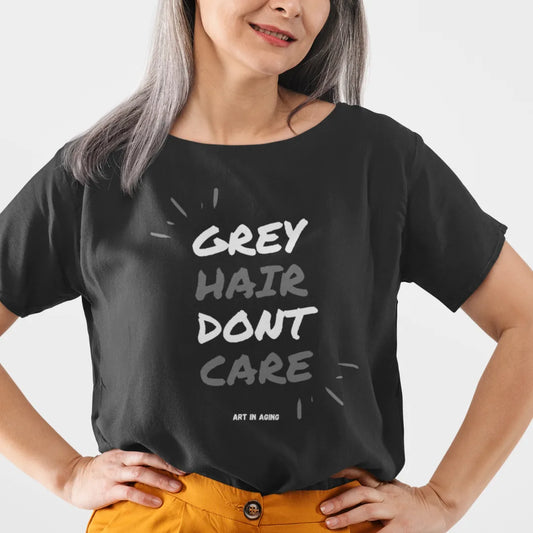
Women who are going grey are often reclaiming this nonna energy, whether they realize it or not. There's something inherently nonna about letting your hair be silver, about refusing to cover up the evidence of your years, about wearing your age visibly and unapologetically. It's a statement: I am not pretending to be younger. I am not ashamed of what time has done to me. I am here, fully present, taking up the space I occupy.
If you're part of the silver sister community, you're part of this same reclamation. You're saying no to the narrative that youth is the only valuable state a woman can occupy. You're saying yes to yourself as you actually are, not as you're supposed to be. You're embodying nonna energy whether or not you've inherited it through family or culture.
Practical Ways to Embrace the Nonna Spirit
Cook with intention. This doesn't mean gourmet cooking; it means cooking for people you care about, regularly, not for performance but for connection. Make a recipe your own. Let people taste the fact that you know how to feed them.
Say what you mean. Stop softening your opinions to make others comfortable. A nonna offers her perspective directly because she's earned the right and she knows its value. Practice speaking your truth without apology.
Invest in looking like yourself. Get the best shampoo for grey hair if you're keeping your silver. Get a great haircut that makes you feel powerful. Wear clothes that fit you now, that make you feel like yourself. This isn't vanity; this is respect for your own presence.
Build your home around what you love. Your space should reflect your taste and your values, not someone else's expectations. Whether it's silver sister shirts or a kitchen full of copper pots, your environment should speak to who you are.
Show up for people you care about. Notice when they're struggling. Remember things they've told you. Offer your help without waiting to be asked. This is how a nonna demonstrates her value—through presence and attention.
Take up space in conversations. Share your stories. Offer your perspective. Don't wait to be invited to speak. You have lived long enough to have something worth saying.
The Nonna Legacy: What You're Passing Down
One of the most powerful things about embracing nonna energy is understanding that you're not just living for yourself—you're modeling something for everyone watching you. If you have children or grandchildren, they're learning from how you treat your own aging. Are you apologizing for it? Hiding from it? Or are you meeting it head-on, with grace and humor and refusal to pretend it isn't happening?
Women in your life who are younger are watching too, even if they don't realize it. They're noticing whether you seem smaller and less interested in living as you get older, or whether you seem more fully yourself. They're learning whether aging means disappearing or whether it means finally having the confidence to be exactly who you are. This is the legacy of nonna—not a specific recipe or tradition, but an attitude about how a woman can take up space in the world no matter how many years have passed.
By embracing the nonna spirit, you're also giving yourself permission that you might not have known you needed. Permission to stop apologizing. Permission to have strong opinions. Permission to take care of yourself the way you care for others. Permission to be valuable not because of how you look or what you produce, but simply because you exist and you've lived long enough to know things.
What does nonna mean? It means a woman who has decided that her age is not a liability to be managed but a credential to be honored. It means showing up fully, speaking clearly, feeding generously, and refusing to make herself smaller to accommodate a world