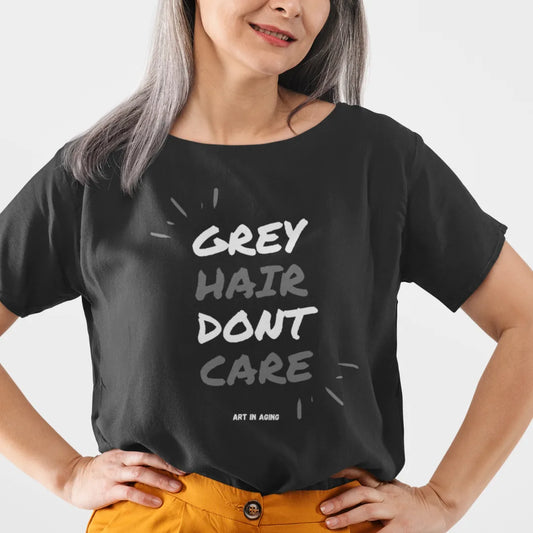
Let's be honest: once you've made the decision to go grey, you're not looking for permission to own it. You're looking for the actual tools to do it well. And that means understanding not just what *does* work with grey hair, but what actively works against you—the color combinations, fabric choices, and styling habits that can make even the most gorgeous silver mane look like it's fighting for attention instead of commanding it.
The thing about grey hair is that it's not neutral. It's a statement. It has undertones—cool silvers, warm greys, steely blues—and it reflects light in ways that your former hair color probably didn't. That means your wardrobe needs to be intentional. Not in a precious, fussy way. In a "I know what I'm doing" way.
Here's what to skip, and why it matters.
Wash-Out Neutrals That Match Your Hair Exactly
This is the sneaky mistake. You think you're being sophisticated by wearing grey, beige, or taupe—colors that "go with everything." And they do, technically. But when you're wearing a grey sweater, grey pants, and have grey hair, you've created a visual void. There's nothing to anchor the eye, nothing that says "I chose this on purpose."
The grey-on-grey-on-grey look can flatten your complexion and make you disappear into your own outfit. It's the opposite of what we're after when we've decided to let our hair be seen. Grey hair wants a conversation partner—something that either complements it or contrasts with it meaningfully.
This doesn't mean never wearing grey again. It means pairing it strategically. A grey cardigan over a jewel tone, or grey trousers with a coral blouse, or a neutral grey base with one piece of real color or texture that matters. The key is contrast and intentionality. Your outfit should feel like you made a choice, not like you opened the closet and grabbed what matched your head.
Harsh, Cool Black From Head to Toe
Black is powerful. Black is slimming. Black is also, if you're not careful with a silver-haired face, aging in the way we don't mean—as in, "aging like I'm not trying anymore." The issue isn't black itself. It's *only* black, worn unrelentingly around the face and body.
Solid black can create a harsh line that emphasizes fine lines and can make your skin look washed out, especially if your grey is on the cooler, silky side. This is particularly true if you have fair skin. If you have deeper skin tones, black might be your thing entirely—but even then, the monotony of black-black-black can work against you.
The fix: Break it up. A black blazer over a cream or white shirt. Black pants with a warm-toned sweater. Black as a statement piece—a structured coat, a pair of boots—rather than as your entire silhouette. Pair it with white, ivory, camel, jewel tones, or earth tones that actually warm up your face. Let black be dramatic, not dominating.
Overly Bright, Neon Colors That Scream "Compensating"
There's a peculiar assumption that once you go grey, you need to yell louder with color to stay visible. So women load up on hot pink, electric blue, and neon yellow like they're trying to distract people from their age. It's the opposite of confidence, and it reads as anxiety.
Bright colors can work beautifully with grey hair—but not when they're frantic or juvenile. A true, sophisticated fuchsia is different from hot pink. A rich sapphire reads differently than a flat, artificial blue. The difference is saturation, quality, and intention.
If you're drawn to color, choose colors that feel true to you, not colors that feel like a costume change. A woman with grey hair in a gorgeous burnt orange or a deep teal or a warm burgundy looks like she knows something. A woman in electric lime looks like she's trying to prove something. Know the difference.
Thin, Delicate Fabrics That Make You Disappear
This applies especially to women who've gotten the message that they should "dress their age" by wearing appropriately timid, insubstantial clothing. Wispy, tissue-thin fabrics—gossamer blouses, flimsy cardigans—can actually make grey hair look washed out because there's no visual weight or presence to balance it.
Grey hair has presence. It catches light, it has texture, it's a statement. Your fabrics need to meet it halfway. That means structure, weight, and quality. A substantial linen shirt. A well-made wool sweater. A structured blazer in a good fabric. Denim, cotton blends, quality knitwear—these anchor grey hair and make it look intentional rather than faded.
This doesn't mean you need to wear armor. It means choosing fabrics that have some substance, that drape well, that don't disappear against your skin or get lost next to your hair. You want people to see your outfit, not see through it.
Overly Trendy Silhouettes That Pull Focus Away From Your Hair
If you've made the statement of going grey, you've already done something most people won't do. You don't need to compound it by pairing your silver hair with the most exaggerated trend of the moment—oversized everything, micro mini skirts at 60, or whatever fashion is screaming about this season.
This isn't about being boring or conservative. It's about proportion and balance. Your grey hair is already a bold choice. If your silhouette is also trying to be the loudest thing in the room, you've created visual chaos. You want the eye to land on you as a whole, not ping-pong between your hair and some wild cut or proportion that's competing for attention.
Classic silhouettes work with grey hair because they get out of the way. A well-fitted blazer, a good pair of jeans, a wrap dress, a structured coat. These are timeless because they work. They don't distract. They make you look like someone who knows what she's doing, which is what we're after when we've decided to age on our own terms.
Yellowing, Dull Whites and Off-Whites
White is supposed to be the best friend of grey hair. And it is—*if* it's actually white. The problem is cream-colored, yellowing, dingy white that's been washed too many times or made from a cheaper fabric. This will make your grey hair look dingy by association, like you're both aging poorly together.
Invest in actual white pieces—crisp, clean, bright white. Not cream, not ivory, not off-white. Real white. A white button-down shirt. White jeans. A white blazer. When it's genuine white, it makes grey hair sing. When it's not, it drags everything down.
The same logic applies to other neutrals: keep them clean, fresh, and well-maintained. A worn-out beige is worse than no beige at all.
Colors That Clash With Your Undertones
This is where knowing what to wear with grey hair becomes personal. Grey hair has undertones. Some is cool and silvery. Some is warm and champagne. Some is steely blue. Your skin also has undertones—warm, cool, or neutral.
The mistake is ignoring this entirely and wearing colors that fight your undertones. If you have cool grey hair and warm undertones to your skin, a sickly mustard or a muddy warm brown is going to look wrong. If you have warm grey hair and cool undertones, icy pastels are going to clash.
Figure out your undertones—both hair and skin—and let that guide you. Look good in jewel tones? They probably work. Gravitate toward earth tones? Go there. It's not about restriction; it's about knowing what makes you look alive rather than exhausted.
Fabrics and Styles Associated With "Elderly"
Polyester that crackles. Busy floral prints in tiny, timid patterns. Shoulder pads from two decades ago that make you look like you're wearing sadness. Mock turtlenecks. Boxy cardigans in muted mauve. These are the things we're told to wear because we have grey hair, not things we should actually wear.
The line between "dressing appropriately for your age" and "dressing like you've given up" is real, and it's important. You can dress after 50 without dressing like a parody of age. Skip the stuff that reads as costume, and choose pieces that are quality, well-made, and that make you feel like yourself—just a version who's been around the block and is completely comfortable with it.
Key Takeaways
- Create contrast: Don't let your hair disappear into your outfit. Pair grey with colors that either complement or meaningfully contrast with it.
- Choose quality fabrics: Substantial, well-made materials anchor grey hair and make it look intentional. Flimsy fabrics will make you disappear.
- Avoid black-only dressing: Black is powerful, but all-black can read as aging rather than intentional. Break it up with other tones.
- Match undertones: Figure out whether your grey is cool or warm, and wear colors that harmonize with both your hair and skin undertones.
- Skip the trends: You've already made a statement with grey hair. You don't need exaggerated silhouettes or juvenile styles to compound it.
- Invest in real white: Crisp, clean, genuine white makes grey hair look fresh. Dingy cream or yellowing white does the opposite.
- Ditch the "elderly" costume: You're not dressing for age; you're dressing for yourself. Skip the fabrics, patterns, and silhouettes that feel like a parody.
The real thing about going grey is that it demands intention. You've already rejected the default—the assumption that you should color your hair to look younger—so you might as well go all the way and be intentional about everything you wear with it. Skip the mistakes, pay attention to contrast and undertones, choose quality, and dress like someone who's made a choice. Because you have.