Nevertheless She Persisted: What the Phrase Really Means for Women Who've Stopped Hiding
In February 2017, Senator Mitch McConnell attempted to silence Senator Elizabeth Warren on the floor of the United States Senate. He read a rule. He called a vote. He explained his reasoning in a statement that would immediately and permanently backfire: "She was warned. She was given an explanation. Nevertheless, she persisted."
Within hours, the phrase had left the Senate floor and entered the wider culture. It was on t-shirts and tote bags and coffee mugs. It showed up in yearbooks and Instagram bios. Women who had never followed a Senate debate found themselves saying it to each other in cafes, in group texts, in the margins of meeting notes.
Why did it land so hard?
Because almost every woman recognized herself in it.
The Universal Experience of Persistence
The specific moment — a woman being silenced mid-sentence in a hall of power — was political. But the experience it named was not confined to politics. It was, for many women, the experience of their entire adult lives.
She was warned to stay in her lane. She was given an explanation for why the promotion wasn't going to her. She was told the idea wouldn't work. She was advised to be more realistic, more diplomatic, more careful about how she came across.
She persisted anyway.
The phrase resonated across political lines, across generations, across professional and personal contexts, because the experience of pushing against resistance — and choosing to keep going — is not an extraordinary experience. It is the ordinary experience of women moving through a world that was not designed with them in mind.
What Persistence Looks Like After 50
For women in their 50s, 60s, and beyond, the phrase takes on another layer. The resistance that comes with age is specific. It is the resistance of a culture that has decided women past a certain age are no longer the protagonists — that they should step back, take less space, become more helpful and less demanding.
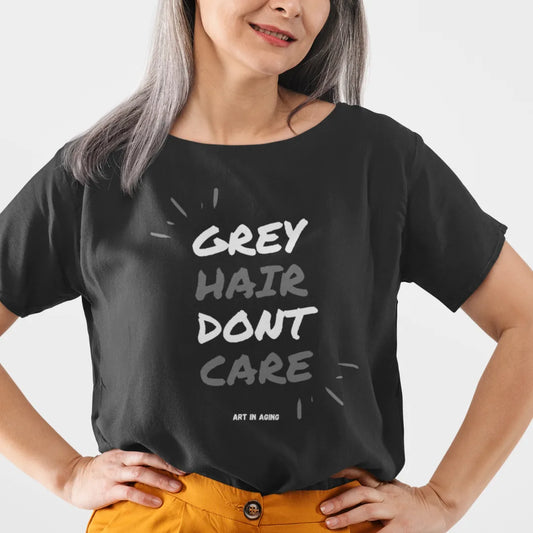
It is also the resistance of beauty standards that insist women should look as young as possible for as long as possible, that grey hair is something to be corrected, that aging visibly is a form of failure.
Women who have stopped dyeing their hair know this resistance firsthand. The comments. The questions. The well-meaning people who ask if you're planning to "do something" about the grey. The systems — professional and social — that subtly penalize women who look their age while rewarding those who maintain the appearance of youth.
To let your hair go grey, to wear it without apology, to show up as the age you are: this is persistence too. It is quiet, personal, and real.
The Women Who Persist
There is no single profile. The woman who persisted might be the executive who outlasted three rounds of restructuring that targeted her. She might be the artist who kept making work after everyone told her the market wasn't interested. She might be the mother who built something while raising children while managing everything else, and who arrived at her 60s with a life full of things she built with her own hands.
She might be the woman who simply decided to stop apologizing for being herself — for having opinions, for taking up space, for letting her hair go silver and wearing it like the statement it is.
All of these are persistence. All of them count.
The Phrase as Identity
What makes "nevertheless she persisted" endure — nine years after the Senate floor moment that launched it — is that it describes not an event but a character. It doesn't say "she won." It doesn't say "she was right all along." It says: she kept going. And that, for most women, is the more accurate and more meaningful thing to claim.
The women in our community — women who are aging on their own terms, who have stopped letting the culture dictate what they should look like or how much space they should take — are all, in their own ways, persistent women. The grey hair is one version of the story. The career pivots, the creative pursuits, the refusal to become invisible: these are others.
The shirt says it in five words. The life behind it takes longer to tell.
Wear It
For the women in your life who have persisted — through careers, through systems, through beauty standards that weren't designed for them, through everything — the phrase still fits.
- Nevertheless She Persisted T-Shirt →
- Nevertheless She Persisted Sweatshirt →
- Nevertheless She Persisted Tote Bag →
- Nevertheless She Persisted Mug →
Ships worldwide. Printed to order. A gift with meaning.