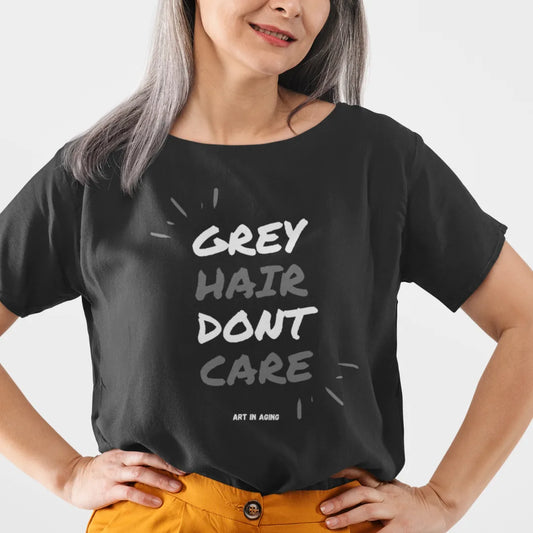
When a woman stops dyeing her hair and lets the grey grow in, she's not just making a beauty choice. She's making a statement. And depending on who you ask, that statement reads very differently. To some, it's radical. To others, it's lazy. To the woman herself, it might simply be a practical decision—and then, somewhere along the way, it becomes something much bigger.
The rise of going grey isn't just a trend. It's a quiet rebellion against the expectation that women must erase themselves to remain acceptable. It's a refusal to spend thousands of dollars, hours in salons, and mental energy maintaining a fiction. And in a culture that has spent decades telling women that aging is something to hide, fight, and apologize for, that refusal carries real weight.
But what does it mean when a personal choice becomes political? And how did something as simple as head hair become a flashpoint in larger conversations about feminism, age, beauty standards, and what women actually owe the world?
The Beauty Standard Industrial Complex and Why Grey Hair Threatens It
For roughly a century, the cosmetics and hair-coloring industry built an empire on a simple premise: grey hair is a problem that needs solving. Not because it's actually unattractive. But because grey hair reads as old, and in a youth-obsessed culture, old is the worst thing a woman can be.
The marketing has been relentless and remarkably consistent. Clairol's famous 1950s slogan asked, "Does she or doesn't she?" The implication was clear: a woman who colored her hair was sexually viable, mysterious, worthy of desire. A woman who didn't was invisible, past her expiration date. Fast forward to the 2010s, and the messaging didn't really change—it just got shinier. "Radiant." "Luminous." "Age-defying." (Note how we defied time itself, not just wrinkles.) The language shifted to self-care and empowerment, but the core message remained: your natural aging is something to correct.
This isn't accidental. The global hair coloring market was worth over $30 billion in 2023. That's billion with a B. That's an industry with a vested interest in convincing women that their grey hair is a liability rather than a neutral fact of biology. The beauty standard industrial complex doesn't make money off women accepting themselves—it makes money off insecurity, repetition, and the constant chase to look younger than they are.
When a woman stops coloring her hair, she opts out of that system entirely. She stops being a customer. She stops participating in the narrative that her value is tied to her appearance relative to youth. And that, to an industry built on that assumption, is genuinely threatening.
The Feminist Argument: Who Benefits When Women Age Visibly?
Here's where the politics get interesting. Feminism and aging have always had an uneasy relationship. Second-wave feminists fought for women's right to be taken seriously in the workplace and in public life, but rarely did that conversation center on aging specifically. The implicit understanding was that women would age quietly, invisibly, out of the way. Feminism would be for younger women navigating sexism and discrimination. Aging was someone else's problem.
But a growing cohort of feminist thinkers—many of them actually aging—have started asking harder questions. If feminism is about the right to exist in the world without apology, doesn't that include the right to exist visibly as an older woman? If we reject the male gaze and objectification, shouldn't we also reject the pressure to remain perpetually youthful to avoid that gaze? And if we're serious about dismantling systems that profit off women's insecurity, isn't the hair-coloring industry a pretty good place to start?
Feminism and aging becomes a grey hair political statement when a woman's choice to go grey is framed—and experienced—as a refusal. A refusal to participate in her own erasure. A refusal to spend money and time on maintenance of a beauty standard that serves everyone but her. A refusal to accept the premise that she should disappear as she gets older.
It's not that every woman who goes grey is making a feminist argument, or that every woman who colors her hair is buying into the patriarchy. It's more nuanced than that. But the cultural moment we're in—where going grey is increasingly visible, increasingly normalized, increasingly claimed by women as an active choice—that's when it becomes political. That's when it becomes a statement.
Visibility and the Courage It Takes
Let's be honest: going grey is still socially risky in many contexts. Women report being asked if they're sick, if they've given up, if something is wrong. They're told they look tired, older, less polished. They lose jobs, or worry they will. They navigate unsolicited commentary from partners, family members, and strangers who feel entitled to opinions about their hair.
That's not coincidental. Systems don't tolerate visible rejection without cost. Women over 50 are already less visible in media, in workplaces, in the cultural imagination. When a woman lets her grey show, she's making that invisibility harder to ignore. She's saying: I'm here. I'm aging. And I'm not pretending otherwise.
That visibility is political because it changes the conversation in rooms where the conversation was previously settled. It makes other women think twice about their own choices. It chips away at the notion that there's only one acceptable way to age as a woman. It normalizes something that was, until very recently, considered a personal failure.
The courage required to be visible in this way—especially early in the transition, especially in professional or social contexts where appearance carries weight—is real. And that courage is absolutely part of what makes this a political act.
The Silver Sister Movement and Collective Power
None of this happens in isolation. The shift in how women think about grey hair is deeply connected to community. The silver sister movement represents a fundamental recognition: when women stop going it alone and start going grey together, the personal becomes unmistakably political.
Community changes everything. It transforms a private anxiety into a shared experience. It reframes a beauty choice as a cultural statement. It provides the scaffolding—the shared language, the validation, the collective action—that makes a movement possible.
When you join the silver sister community, you're not just getting beauty tips or transition advice. You're joining a conversation about what it means to refuse apologizing for your age. You're part of a group of women who've decided that their grey hair is not a problem to be solved, but a fact to be claimed. That's political work, even if it doesn't feel like it when you're just combing your hair in the morning.
Making It Personal: How to Own Your Grey Hair as a Statement
So you've decided that grey hair might be your thing. How do you turn that decision into an actual statement, rather than just a hair choice that happened to you?
Stop Apologizing for the Transition
The grey hair timeline is going to be awkward. Your hair will be two-toned. People will ask questions. You don't need to explain yourself or minimize your choice. "I'm growing out my natural color" is a complete sentence. You can also just say, "I like it this way," and then change the subject. What to expect going grey is that some people will be weird about it. That's on them.
Invest in What Makes Your Grey Look Good
This isn't about buying into beauty standards; it's about respecting the choice you've made. Get a good shampoo for grey hair. Get a cut that flatters you. Wear colors that make you feel confident. What to wear with grey hair should be whatever makes you feel like yourself—and often, that's bolder color, better jewelry, more intentional style choices than you were making before. Grey hair is an excellent reason to take your appearance seriously on your own terms.
Name What This Means to You
Is going grey about refusing to participate in a beauty standard? About reclaiming time and money? About celebrating your actual age? About rejecting invisibility? All of the above? Get clear on what this statement means in your own life. It doesn't have to be grand or political in the way others might understand it. But knowing what you're claiming makes the choice feel solid.
Connect With Other Women Doing This
Find your people. Whether that's silver sisters in your own life or online communities like this one, you need witnesses to your choice. Not to validate you (you don't need that), but to remind you that this is happening across the culture. That you're not alone. That this is a movement, not just your personal quirk.
The Bigger Picture: Grey Hair and Other Refusals
Grey hair doesn't exist in a vacuum. For many women, it's part of a larger decision to stop shrinking themselves. To stop dieting when they're not hungry. To stop wearing uncomfortable clothes. To stop explaining their opinions or apologizing for their knowledge. To stop making themselves smaller, quieter, less visible.
Aging gracefully is a phrase that's usually code for "age invisibly." But actually aging gracefully—intentionally, visibly, on your own terms—requires refusing a lot of small things that add up to erasure. Grey hair is often where it starts. Then it's dressing after 50 in whatever you actually like. Then it's the career move you want, the trip you take, the relationships you keep or discard.
That's the real power of a grey hair political statement. It's not about the hair itself. It's about what claiming your hair gives permission for: claiming your age, your time, your space, your choices. It's about refusing the narrative that