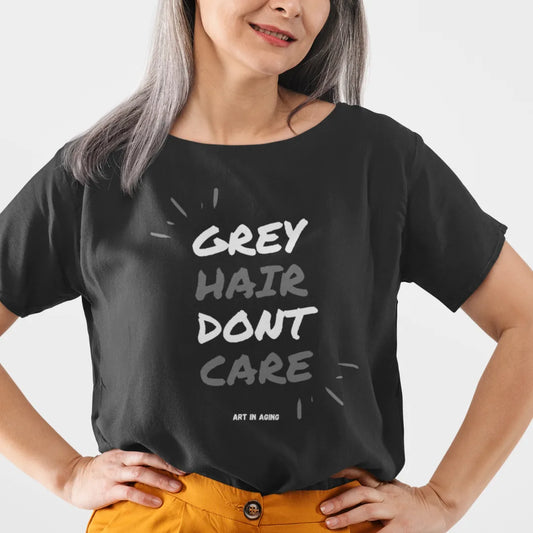
You stopped dyeing your hair six months ago. Maybe it was a pandemic decision that stuck, or maybe you were just tired of the expense and the maintenance and the feeling that you were apologizing for something that should be entirely ordinary. Now your greys are coming in—silver, pewter, salt-and-pepper, whatever you want to call them—and something unexpected is happening. People are noticing. And they're saying nice things.
This catches a lot of women off guard. We're conditioned to believe that grey hair makes us invisible, that it's a one-way ticket to being overlooked. The cultural narrative is so persistent that when the opposite happens—when you get compliments, when people ask about your hair, when you catch someone studying the texture and shimmer of it—it can feel almost disorienting. Am I imagining this? Is this real? Why is my grey hair getting attention when I was told it would do the opposite?
The answer is worth understanding, because it changes something fundamental about how you see yourself and your place in the world. Your grey hair is attracting attention because it reads as a choice, a statement of confidence, and honest self-acceptance. Those things are rare enough that people respond to them. And that response—that attention you didn't expect—is worth examining, because it tells you something important about what you've actually accomplished by stopping the dye.
The Confidence Effect Is Real and Visible
Let's start with the most obvious thing: grey hair requires you to make an active choice to stop fighting nature. That's different from letting something happen to you by default. The moment you decide to keep your greys and let them grow in, you've made a statement—not with words, but with your appearance. You've said I am comfortable enough with myself to let people see me age. That's not a small thing.
And here's what's crucial: people can see that decision. Confidence has a visual signature. It shows up in how you carry yourself, in the quality of attention you give to the things you do care about (your cut, your style, your overall presentation), and in the absence of that particular hunched, apologetic energy that comes from hiding something you think is wrong with you. When you're not spending mental energy resisting your own existence, other people feel that ease.
The attention you're getting isn't random—it's a direct response to that visible ease. You're not just growing your hair out; you're demonstrating that you don't believe there's anything wrong with how you look. That reads as magnetic. It reads as strength. And strength gets attention, always.
Grey Hair Has Become Aesthetically Powerful in a Way It Wasn't Before
There's also a cultural shift happening that you're benefiting from, whether you intended to or not. Grey and silver hair has moved from "something to hide" to "genuinely striking" in the space of roughly a decade. Social media has accelerated this considerably. When you can see thousands of photos of women with gorgeous silver hair, styled beautifully, living full lives—not as exceptions, but as a visible community—the whole narrative changes. Grey becomes aspirational. It becomes a look.
This matters because it means that when people compliment your grey hair now, they're not patting you on the head for aging bravely, like you've accomplished something noble despite a deficit. They're responding to something that actually looks good. Your silver might catch the light in a way that's genuinely beautiful. Your salt-and-pepper might have a texture and depth that dyed hair can't quite match. The white-blonde of pure silver can work with a wider range of skin tones than you'd expect. These aren't consolation prizes. They're real aesthetic advantages.
If you're wearing colors that complement your new hair tone, the effect is even more pronounced. Many women find they can wear colors they never could before—true blacks, jewel tones, silvers and whites—because their grey hair changes their entire color story. When you get your wardrobe in sync with your new hair, people respond not just to the hair, but to the overall coherence of your appearance. That's when the compliments really start rolling in.
You're Part of a Movement—and Movements Get Noticed
There's something else at play: you're not alone in this. The decision to stop dyeing your hair is no longer a fringe choice. More women are choosing to go grey than ever before, and that visibility creates momentum. When people see more grey hair, they become more accustomed to it, and simultaneously, the women choosing it appear braver because they're swimming against a cultural current that's—while shifting—still strong in many circles.
You're part of what could fairly be called the silver sister movement—women who've decided that their natural hair color is not something to apologize for. This movement has real cultural weight. It's connected to broader conversations about authenticity, about feminism and aging, about refusing to perform youth when you're not young. The attention you're getting is, in part, recognition of that decision to opt out of an exhausting performance.
This is worth knowing because it shifts the frame. You're not getting compliments despite your age or in spite of your grey hair. You're getting compliments because you're visibly not afraid of either one. That's the actual thing people are responding to.
Managing the Attention and Enjoying It Without Overthinking
That said, attention can be complicated. If you spent years feeling invisible, suddenly being noticed can feel strange. You might wonder if it's genuine or performative. You might worry about how to respond. You might even find it uncomfortable in unexpected moments.
Here's what helps: remember that you don't owe anyone an explanation for your hair. You can accept a compliment with a simple "thank you" and move on. You don't need to tell the story of why you stopped dyeing it (unless you want to). You don't need to perform gratitude or modesty. A compliment about your appearance is just information that someone found you striking in that moment. You can take it or leave it.
If the attention feels positive and you're enjoying it, lean into that. It's allowed. This is part of the reward for making a choice that took courage—not because you're supposed to care what other people think, but because it's genuinely nice to move through the world and have people respond to you with appreciation rather than pity or erasure. That's a material difference in how you experience your days.
If the attention makes you uncomfortable, that's also valid. Some people prefer to move through the world quietly. If you're one of them, remember that the compliments often say more about the complimenter (that they're noticing age-positivity, or good style, or confidence) than they do about any obligation you have to be seen or celebrated.
Make Sure Your Hair Is Actually Working for You
The truth is, not all grey hair gets equal attention, and that matters. Some of the compliments you're receiving are undoubtedly about the fact that your grey hair looks healthy, shiny, and well-maintained. If you're getting less attention than you'd like, or if your hair feels dull or brassy, it might be worth examining your actual hair care routine.
The best shampoo for grey hair makes a real difference. Grey hair has different needs than pigmented hair—it can be coarser, it picks up yellowing or brassiness easily, and it needs moisture. If you're still using whatever shampoo you used when you had dyed hair, you might be working against yourself. A good grey-specific shampoo and conditioner, paired with occasional purple-toning treatments if you're dealing with brassiness, will make your greys look shinier and more vibrant. That's not vanity; that's maintenance.
Similarly, your cut matters enormously. Grey hair often looks better with a really good cut—something that plays to your actual face shape and hair texture, not something generic. If you're using the same stylist you've used for years, this might be a good moment to ask specifically for a cut that's designed to work with your new hair, or to find someone who specializes in grey hair. The attention you're getting is partly about the hair itself, but it's also about how well it's styled.
Lean Into Your Own Version of This
One last thing: the attention you're getting is for your version of grey hair, not anyone else's. You might have thick silver, fine white-blonde greys, or dark salt-and-pepper. You might be early in your grey hair transition or fully transitioned. You might have embraced it with big changes to your wardrobe and style, or you might have made zero other adjustments and just stopped dyeing. None of these approaches is better than the others. The compliments are for the choice you made and how you're carrying it, not for how closely you match some idealized version of grey-haired femininity.
This matters because it means you get to take the attention you like and ignore the rest. You don't need to perform a particular version of silver-haired womanhood. You don't need to become someone else now that you've stopped dyeing your hair. You just need to be yourself, but with grey hair. That's the actual source of the magnetism people are responding to.
The attention you're getting isn't a surprise. It's the natural result of making a choice that requires confidence, maintaining that choice even when it's countercultural, and showing up in the world as yourself rather than as an apology. That reads. People see it. And they respond. You've earned every compliment, not because you deserve praise for aging, but because you're demonstrating something increasingly rare: the ability to look at yourself and see something worth looking at, grey hair and all. That's worth accepting, and savoring, and letting change how you move through your days.